
2026 Class of MGB-SIAM Early Career Fellows
SIAM is excited to announce the 2026 Class of MGB-SIAM Early Career Fellows. These accomplished early career professionals were chosen based on their achievements; active support of broadening participation in applied mathematics, computational science, and data science; and overall dedication to the field.
The MGB-SIAM Early Career Fellowship recognizes the achievements of early career applied mathematicians — particularly those whose talents and voices have been historically missing from the mathematical sciences in the United States — and provides professional activities and career development. The fellowship reflects a joint commitment by Mathematically Gifted & Black (MGB) and SIAM to promote long-term engagement of fellows within SIAM and continued success within the broader applied mathematics and computational sciences community. The 2026 fellows were chosen by a selection committee consisting of the SIAM Vice President for Equity, Diversity, and Inclusion; MGB representatives; and SIAM members.
SIAM extends heartfelt congratulations to these eight members of the community for their well-deserved recognition as the 2026 Class of MGB-SIAM Early Career Fellows. Read more about our newest fellows below.
- Ariana Brown, Emory University
- Jummy David, Pfizer Inc.
- Govanni Granados, The University of North Carolina at Chapel Hill
- Lara Kassab, California State University at Fullerton
- Corey Oses, Johns Hopkins University
- Kayode Oshinubi, Northern Arizona University
- Jorge Reyes, Virginia Tech
- Daniel Tolosa, Arizona State University
Dr. Ariana Brown, Emory University
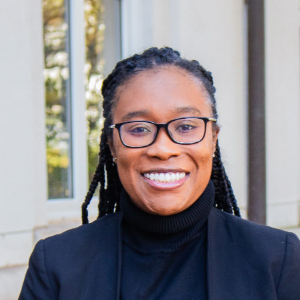
Dr. Ariana Brown is a postdoctoral fellow at Emory University. She received her B.S. in mathematics from Spelman College and completed her Ph.D. in mathematics at Emory University under the advisement of Dr. James Nagy. Dr. Brown currently serves on the junior board for the National Museum of Mathematics. Her research focuses on the development of numerical solutions to ill-posed problems with an application in image restoration and image reconstruction.
Why did you apply for this fellowship?
My former advisor, Dr. James Nagy, recommended that I apply for this fellowship. After further review, I discovered the numerous opportunities for growth and development—both personally and professionally. I believe that this fellowship will expose me to other applications of mathematics as well as new potential research directions.
What are you most looking forward to as an MGB-SIAM Early Career Fellow?
As an MGB-SIAM Early Career Fellow, I am excited about the opportunity to connect with like-minded individuals who are passionate about exposing underrepresented communities to the field of mathematics. This fellowship will help to lay the foundation needed to shine a light on those that society tends to overlook or has forgotten; moreover, it will generate avenues through which I can inspire others to understand the significance of mathematics in their world and how it can be utilized to solve real-world problems.
Pretend you’re talking to a student and tell us about your career, workplace, and what you love the most about your job? Are there any types of problems you work on / solve in your day-to-day?
A typical day involves spending a few hours working on research in the morning followed by teaching and mentoring students via office hours in the afternoon. During my research hour, I am evaluating and creating inner-product free methods to solve linear inverse problems. By solving these problems, I can reconstruct blurred images to receive an accurate picture or diagram. The best part of my day is helping others see the connections and creativity of mathematics.
Dr. Jummy David, Pfizer Inc.
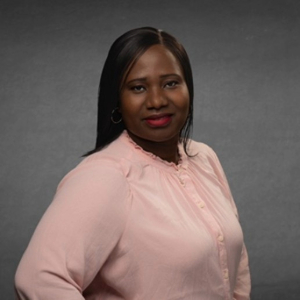
Dr. Jummy David is a Pharmacometrician at Pfizer, using quantitative modeling and simulation to translate data into decisions for drug development in inflammation and immunology. She holds a Ph.D. and M.Sc. in applied mathematics from the University of British Columbia, Canada.
Dr. David’s research centers on quantitative clinical pharmacology, including population pharmacokinetics, PK/PD and biomarker modeling, exposure-response analysis, and mechanistic modeling to inform dose selection, clinical trial design, and data-driven decision-making across drug development.
Dr. David completed a postdoctoral fellowship at York University, where she focused on mathematical modeling for prediction, forecasting, and optimal decision-making, with applications to public health and COVID-19 response. She then worked as a Prevention Effectiveness Fellow at the U.S. Centers for Disease Control and Prevention (CDC), developing models to forecast the health and economic impact of improved hypertension control on cardiovascular disease outcomes, and later as a Pharmacometrician at Novartis supporting immunology programs. Overall, her work integrates applied mathematics and pharmacometrics to advance medicine, public health, and quantitative innovation.
Why did you apply for this fellowship?
I applied for this fellowship because it strongly aligns with my commitment to advancing diversity, equity, and inclusion in quantitative science, while also expanding my impact as a scientist. As a Black woman in STEM, I have experienced firsthand the structural and cultural barriers that underrepresented scholars often encounter. These experiences have deeply shaped my dedication to mentorship, leadership, and building inclusive scientific communities.
Throughout my career, I have actively supported mentorship and inclusion initiatives by guiding students from underrepresented backgrounds, serving as a panelist at women-in-STEM forums, and highlighting the critical role mentorship plays in fostering confidence, resilience, and career persistence. I have also provided informal support to new students and early-career researchers by offering guidance and a welcoming environment during key academic and professional transitions.
This fellowship offers a meaningful opportunity to formalize, strengthen, and broaden these efforts. It would enable me to deepen my leadership capacity, expand my professional network, and leverage my scientific expertise to promote inclusive excellence within quantitative science. Through this opportunity, I aim to unite scientific rigor with purposeful leadership – using my experiences, skills, and resilience to create pathways for others and to serve as a role model for the next generation of scientists.
What are you most looking forward to as an MGB-SIAM Early Career Fellow?
As an MGB-SIAM Early Career Fellow, I am most excited about the opportunity to both mentor others and grow within a dynamic community of applied mathematicians and quantitative scientists who are passionate about solving impactful, real-world problems. I look forward to engaging with peers, senior researchers, and leaders across academia, industry, and applied domains, as well as building relationships that foster collaboration and interdisciplinary exchange.
The fellowship’s strong emphasis on networking and community is especially appealing, as it provides a unique platform to broaden my professional perspective and to develop meaningful collaborations that bridge applied mathematics, medicine, and public health. These interactions will not only enhance my research but also strengthen my ability to translate quantitative insights into practical solutions.
I also view the MGB-SIAM Early Career Fellowship as a catalyst for professional growth and career advancement. The visibility, mentorship, and development opportunities it offers will support my transition into expanded leadership roles, enabling me to increase my scientific impact and contribute more broadly to the applied mathematics and pharmacometrics communities. Overall, I am eager to leverage this fellowship to deepen my expertise, build lasting professional connections, and make sustained contributions at the intersection of quantitative science, medicine, and public health.
Pretend you’re talking to a student and tell us about your career, workplace, and what you love the most about your job? Are there any types of problems you work on / solve in your day-to-day?
If I were speaking to a student, I would describe my career as a journey at the intersection of mathematics, medicine, and real-world impact. I currently work as a Pharmacometrician in Pharmacometrics and Systems Pharmacology at Pfizer, where I turn data into decisions in quantitative medicine, such as identifying the right dose and supporting the designing of efficient clinical trials. Most of my work supports programs in the inflammation and immunology therapeutic area, though I also collaborate across multiple disease areas.
On a typical day, I work on problems that focus on how drugs behave in the body and how they influence biological markers and patient outcomes. I use quantitative tools such as population pharmacokinetics, PK/PD and exposure-response modeling, cQT analysis, and model-based meta-analysis to support decisions related to safety, efficacy, and regulatory strategy. A key part of my role is translating complex modeling results into clear, actionable insights that clinicians, scientists, and project teams can use to make informed decisions. I also contribute to AI and machine-learning initiatives aimed at accelerating pharmacometric modeling and simulation.
What I love most about my job is the opportunity to continuously learn and grow while working on problems that directly improve patients’ quality of life. I value the collaborative environment, the mentorship I receive and provide, and the sense of purpose that comes from contributing to meaningful scientific work. Knowing that the models and decisions I help shape can lead to better health outcomes is a powerful and lasting source of motivation for me.
Dr. Govanni Granados, The University of North Carolina at Chapel Hill
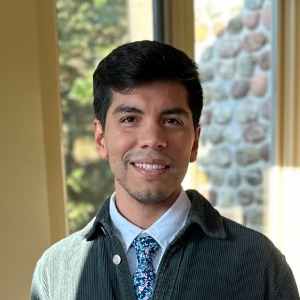
Dr. Govanni Granados is an RTG Postdoctoral Research Associate in the mathematics department of The University of North Carolina at Chapel Hill, working alongside Dr. Jeremy Marzuola and Dr. Casey Rodriguez. He received his Ph.D. in mathematics from Purdue University under the supervision of Dr. Isaac Harris and is a 2025 recipient of the SIAM Postdoctoral Support Program.
Dr. Granados’ research focuses on inverse problems for partial differential equations, with particular emphasis on shape reconstruction problems arising in tomography, inverse scattering, and more recently, linear elasticity. His work addresses parameter and interface recovery using boundary or surface measurements, with applications to non-destructive testing. A central goal of his research is the development of computationally efficient, non-iterative reconstruction methods within a functional analytic framework.
Why did you apply for this fellowship?
I applied for the MGB-SIAM Early Career Fellowship because it aligns closely with both my research and commitment to applied mathematics. The interdisciplinary nature of my research makes SIAM an ideal environment to build collaborations that integrate analysis of partial differential equations, computational science, and inverse problems. Equally important, this fellowship reflects values that resonate with my own commitment to broadening participation in the mathematical sciences. In the past, I have benefited from sustained mentorship and have prioritized mentoring and outreach throughout my career. I see this fellowship as an opportunity to contribute to a community that actively supports early-career researchers in applied mathematics.
What are you most looking forward to as an MGB-SIAM Early Career Fellow?
I am most looking forward to engaging with a diverse network of applied mathematicians working across several disciplines. I am also excited about the opportunity to contribute to SIAM’s efforts in mentorship and inclusion. I also look forward to participating in initiatives that support students and early-career researchers from underrepresented backgrounds, as well as helping organize sessions or activities that highlight diverse perspectives in applied mathematics.
Pretend you’re talking to a student and tell us about your career, workplace, and what you love the most about your job? Are there any types of problems you work on / solve in your day-to-day?
I’m a mathematician, and I am currently a postdoctoral researcher at The University of North Carolina at Chapel Hill. My job is a mix of research, teaching, and mentoring. A typical day starts with making progress on my research projects. This may require finding references, working on proofs, meetings with collaborators, or coding for numerical validation. At some point during the day, I shift my focus to my teaching responsibilities. This may require preparing a lecture, creating homework assignments, or writing and grading exams. On some days of the week, I hold office hours, where I discuss the course material with students. What I love most about my job is being an active participant in advancing my field of research, as well as teaching.
Dr. Lara Kassab, California State University at Fullerton
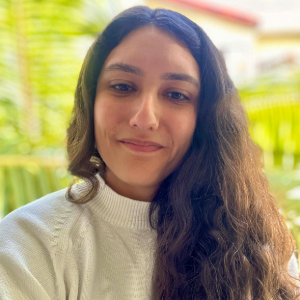
Dr. Lara Kassab is an assistant professor of mathematics at California State University, Fullerton. She earned her Ph.D. in mathematics from Colorado State University, Fort Collins. Her research lies at the intersection of numerical linear algebra and machine learning, where she develops and analyzes linear algebraic methods that enhance interpretability, fairness, and computational efficiency in large-scale data science tasks.
Why did you apply for this fellowship?
I applied for the MGB-SIAM Early Career Fellowship because it aligns with my commitment to advancing applied mathematics while also creating pathways for underrepresented groups in our field. The fellowship offers valuable networking opportunities within SIAM, support for community building, and access to professional activities and career development. The financial support would also enable me to participate in SIAM Annual Meetings and other SIAM conferences, where I can share my research and collaborate with others in the field.
What are you most looking forward to as an MGB-SIAM Early Career Fellow?
I am excited to build connections with fellow early-career applied mathematicians and the broader SIAM community. I look forward to learning from and supporting others who are navigating similar challenges and pursuing impactful research. I'm also looking forward to expanding access within the SIAM community for students and researchers from underrepresented groups and helping sustain the kind of inclusive environment that has been so meaningful in my own journey.
Pretend you’re talking to a student and tell us about your career, workplace, and what you love the most about your job? Are there any types of problems you work on / solve in your day-to-day?
As an assistant professor in applied mathematics, I get to do three things I love: research, teaching, and connecting with others. What I enjoy most about research is the opportunity to learn new things, apply what I already know, and be creative in developing novel techniques to solve problems, often in collaboration with others. I believe that rigorous mathematical foundations and innovative methods are essential for solving high-impact, real-world problems.
Teaching is another part of my job that I find deeply meaningful. I enjoy learning alongside my students and finding creative ways to explain mathematical ideas. I especially enjoy explaining how mathematics underlies many aspects of everyday life and how it has shaped the world around us. Helping students see the beauty and importance of mathematics is one of the most rewarding parts of my work.
Most importantly, I value the connections I build through my career. Whether I am working with students, researchers, or others with shared interests and experiences, these relationships are central to why I enjoy my job and why I chose this career.
Dr. Corey Oses, Johns Hopkins University
Watch the video below to learn more about Dr. Corey Oses and his motivations for applying to be an MGB-SIAM Early Career Fellow, as well as what he hopes to take away from the fellowship.
Dr. Kayode Oshinubi, Northern Arizona University
Watch the video below to learn more about Dr. Kayode Oshinubi and his motivations for applying to be an MGB-SIAM Early Career Fellow, as well as what he hopes to take away from the fellowship.
Dr. Jorge Reyes, Virginia Tech
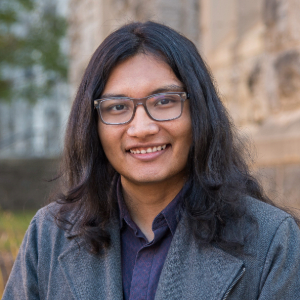
Dr. Jorge Reyes is a postdoctoral associate in the Department of Mathematics at Virginia Tech working on reduced order modeling for fluids with Dr. Traian Iliescu. He completed his Ph.D. in computational mathematics at University of Nevada, Las Vegas (UNLV) in 2023 under the guidance of Dr. Monika Neda, studying the numerical analysis of the finite element method for fluid dynamics and biological applications.
Dr. Reyes’ research revolves around numerical analysis, primarily in computational fluid dynamics, and branching into traffic modeling, and occasionally, biological applications. Current his research aims to bridge traditional numerical analysis with data-driven approaches, creating a new generation of computational tools that are as trustworthy and foundational for science and engineering as classical methods.
Why did you apply for this fellowship?
I have been involved in the SIAM community since graduate school. I actually founded UNLV’s SIAM student chapter with some friends after attending my first SIAM conference as a graduate student. I applied for this fellowship to maintain and strengthen my connection to SIAM and help me attend and organize minisymposia at SIAM conferences, such as the SIAM Conference on Computational Science and Engineering and SIAM Annual Meeting.
What are you most looking forward to as an MGB-SIAM Early Career Fellow?
I am most looking forward to joining a supportive community of fellows, mentors, and collaborators through the MGB-SIAM Early Career Fellowship. Learning from experienced researchers and engaging in co-mentoring with my cohort will be invaluable for my professional growth and will help shape my development as a computational mathematician. I am especially excited to engage with the SIAM community by presenting my work, building lasting collaborations, and organizing minisymposia that facilitate the exchange of high-quality scientific ideas and highlight innovative research across the applied mathematics community.
Dr. Daniel Tolosa, Arizona State University
Watch the video below to learn more about Dr. Daniel Tolosa and his motivations for applying to be an MGB-SIAM Early Career Fellow, as well as what he hopes to take away from the fellowship.
Related Reading


Stay Up-to-Date with Email Alerts
Sign up for our monthly newsletter and emails about other topics of your choosing.