
2026 January Prize Spotlight
Congratulations to the following 2026 SIAM joint prize recipients and lecturers! All award recipients will be recognized at the 2026 Joint Mathematics Meetings (JMM 2026), to be held January 4-7, 2026, in Washington, D.C., U.S.
- Yunseo Choi – Morgan Prize for Outstanding Research in Mathematics by an Undergraduate Student
- Étienne Ghys – AMS-MAA-SIAM Gerald and Judith Porter Public Lecture
- Noah Giansiracusa – Joint Policy Board for Mathematics Communications Award
- Ryan Hynd – MAA-SIAM-AMS Hrabowski-Gates-Tapia-McBay Lecture

Yunseo Choi
Yunseo Choi, Massachusetts Institute of Technology, is the 2026 recipient of the Frank and Brennie Morgan Prize for Outstanding Research in Mathematics by an Undergraduate Student “for wide-ranging mathematical research accomplishments spanning several fields such as number theory, combinatorics, and applications in economics and computing, with publications appearing in venues including the Proceedings of the American Mathematical Society, the Journal de Théorie des Nombres de Bordeaux, Advances in Applied Mathematics, Discrete Mathematics, and the proceedings of the ACM Conference on Economics and Computation.”
She will be recognized at the 2026 Joint Mathematics Meetings Awards Celebration on Monday, January 5, 2026, at 5 p.m. ET.
The Frank and Brennie Morgan Prize is awarded annually for outstanding research in mathematics by an undergraduate student (or students having submitted joint work). Students in Canada, Mexico, or the U.S. and its territories are eligible for consideration for the prize. The prize is given jointly by the American Mathematical Society (AMS), the Mathematical Association of America (MAA), and SIAM, and the recipients are chosen by a joint selection committee.
Choi is a recent graduate of Harvard College, where she received a joint bachelor’s degree in mathematics and physics. While a high school senior at Phillips Exeter Academy, she received a gold medal at the 10th European Girls Mathematics Olympiad and won first place at the 80th Regeneron Science Talent Search. As an undergraduate, Choi was named a 2024 Goldwater Scholar and received the 2025 Thomas T. Hoopes Prize. Currently, she is a first-year graduate student at MIT, where she is supported by the Ida M. Green Fellowship and the National Science Foundation Graduate Research Fellowship.
Q: Why are you excited to receive the award?
A: I am extremely honored and humbled to receive the 2026 Frank and Brennie Morgan Prize! I thank the Morgan Family, AMS, MAA, and SIAM for recognizing undergraduate mathematics research.
Q: What does your work mean to the public?
A: I worked on research projects in number theory, combinatorics, and economic theory. I am especially grateful to Professors Scott Kominers, Ken Ono, and Shengwu Li for empowering me to pursue research.
Q: Could you tell us about the research that won you the award?
A: My number theory projects are on partition congruences and elliptic curves. My combinatorics projects are on stack-sorting maps, chip-firing games, graph labeling, and Young Tableaux. My economic theory projects are on matching markets.
Interested in submitting a nomination for the Frank and Brennie Morgan Prize? The prize next opens for nominations on February 1, 2026.
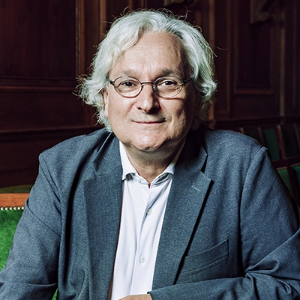
Étienne Ghys
Dr. Étienne Ghys, Ecole Normale Supérieure de Lyon, will deliver the 2026 AMS-MAA-SIAM Gerald and Judith Porter Public Lecture. His lecture, titled “The Shape of Letters: from Leonardo da Vinci to Donald Knuth,” will be given at JMM 2026 on Sunday, January 4, 2026, at 10:50 a.m. ET
LETTERS are not mere signs. They are tiny works of art, fashioned by hands, nourished by minds, and carried through the ages. They embody techniques, traditions, inventions – and a surprising amount of geometry. From artist-geometers like Leonardo da Vinci to the mathematician-computer scientist Donald Knuth, letters reveal themselves as geometric figures. Even Louis XIV commissioned the Académie des sciences in Paris to design a typeface symbolizing his glory: the Romain du Roi, sometimes seen as the very first appearance of pixels. Once we learn to read, letters become invisible, sinking into our subconscious. And yet they shape our culture in profound ways. They stand as the guardians of History.
The Gerald and Judith Porter Public Lecture is given every year at the Joint Mathematics Meetings on a mathematical topic accessible to the broader community. The Porter Public Lecture series is offered jointly by the MAA, AMS, and SIAM.
The Gerald and Judith Porter Public Lecture Series was established through the generosity and inspiration of Gerald and Judith Porter. Gerald Porter is Professor Emeritus of Mathematics at the University of Pennsylvania and has served the MAA as Treasurer, as a member of the Board of Governors for 22 years, and as a member and chair of numerous committees. Judith Porter is Professor Emerita of Sociology at Bryn Mawr College. Her research focuses on the relationship between AIDS and addiction.
Dr. Ghys, born in 1954, is a French mathematician whose research focuses on geometry, dynamical systems, and low-dimensional topology. He earned the agrégation in mathematics from the École normale supérieure de Saint-Cloud (ENS) in 1978. During his studies, he attended courses by Jean Giraud at ENS and Henri Cartan at the Faculté des Sciences d’Orsay. He completed his doctorate in 1979, defending a thesis on locally free actions of the affine group under the supervision of Gilbert Hector.
From 1979 to 1981, Dr. Ghys worked as a cooperating scientist at the Instituto de Matemática Pura e Aplicada in Rio de Janeiro. In 1986, he received accreditation to lead research projects, with a focus on dynamical systems and laminations. Beginning in 1988, he played a key role in the creation of the Unit of Pure and Applied Mathematics at the École normale supérieure de Lyon, where he is currently a CNRS Director of Research.
Dr. Ghys has been a member of the French Academy of Sciences since 2005 and has served as its Permanent Secretary since 2018. He was also appointed to the Scientific Council of National Education (2018). His contributions to mathematics extend beyond research; he is widely recognized for his commitment to the public dissemination of mathematics and for promoting its beauty and societal value. In recognition of this work, he was awarded the 2022 CNRS Medal for Scientific Mediation.
Over the course of his career, Dr. Ghys has received numerous honors, including the Clay Prize for the Promotion of Mathematics (2015), election as an Honorary Member of the London Mathematical Society (2017), and appointment as a Knight of the Legion of Honour (2012). He has also been awarded the CNRS Silver Medal (1991), honorary doctorates, and multiple prizes for scientific communication, including awards for the film “Dimensions… A Mathematical Walk” and his work on chaos theory. Learn more about Dr. Étienne.
Know someone who would be a great Porter Lecturer? The AMS collects recommendations year-round - suggest a speaker.

Noah Giansiracusa
Dr. Noah Giansiracusa, Bentley University, is the 2026 recipient of the JPBM Communications Award “for his extraordinary contributions to public understanding of the societal impacts of algorithms through his acclaimed books and influential media presence.” He will deliver a talk at JMM 2026, titled “Practical tips for becoming a public-facing mathematician,” on Wednesday, January 7, at 1 p.m. ET.
The Joint Policy Board for Mathematics (JPBM) established the JPBM Communications Award in 1988 to reward and encourage communicators who, on a sustained basis, bring mathematical ideas and information to non-mathematical audiences. Since 2016, the prize may be awarded in two categories: For Public Outreach and For Expository and Popular Books. Up to two awards are made annually.
JPBM is a collaborative effort of SIAM, the American Mathematical Society (AMS), the American Statistical Association (ASA), and the Mathematical Association of America (MAA).
Dr. Giansiracusa is an associate professor of mathematics at Bentley University and a visiting scholar at Harvard, with a Ph.D. in algebraic geometry from Brown University. He has appeared on CNN Live and BBC radio and written for Washington Post, Scientific American, TIME, Wired, Boston Globe, and others. The Nobel Prize-winning economist Paul Romer said of Dr. Giansiracusa’s book How Algorithms Create and Prevent Fake News: "There is no better guide to the strategies and stakes of this battle for the future.” His latest book, Robin Hood Math, explores how people of all backgrounds can use math to help navigate life and take back control in a world dominated by algorithms. Dr. Giansiracusa is also cohost of the “AI in Academia” podcast. Learn more about Dr. Giansiracusa.
Q: Why are you excited to receive the award?
A: When I look through the names of the previous recipients for this prize, I am amazed—these are my idols, my inspirations for how to bring math to the public. I don't think I've really earned a spot among them yet, but getting this award makes me want to work harder and keep finding ways to engage the public with math, so that I can try to earn my place among them. So, I view it less as a reflection of what I've accomplished and more as a motivation to accomplish more!
Q: What does your work mean to the public?
A: Math has always been important, but more and more of our interactions and experiences are filtered through algorithms, and these algorithms live and breathe math. So, I think it's fair to say that our lives are increasingly being processed in mathematical ways. The problem is that most people falsely believe that understanding these ubiquitous algorithms is beyond their capability, and most tech companies—and many tech journalists—aren’t helping; they happily lean into the air of mystery and power that AI and algorithms have today. I just want to help people increase their understanding of what's happening in their lives today and have more agency in their daily interactions through the power of math.
Q: Could you tell us about the research that won you the award?
A: This award is mostly for the two books I've written: one on the role data-driven algorithms play in our information ecosystem, and the other on the ways ordinary people can use math to take power back from the elites. Both books were written to be perfectly accessible and understandable by anyone, regardless of background and aptitude. I'm trying to help people of all walks of life understand the mathematical processes that impact so much of their lives.
Interested in submitting a nomination for a future JPBM Communications Award? The AMS accepts nominations year-round - make a suggestion today.
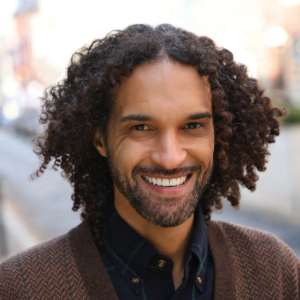
Ryan Hynd
Dr. Ryan Hynd, University of Pennsylvania, will deliver the 2026 MAA-SIAM-AMS Hrabowski-Gates-Tapia-McBay Lecture. His lecture, titled “Reuleaux polyhedra: from discrete to convex geometry” will be given at JMM 2026 on Tuesday, January 6, 2026, at 9 a.m. ET.
The MAA-SIAM-AMS Hrabowski-Gates-Tapia-McBay Lecture is named after four influential scientists of color: Freeman Hrabowski, President of the University of Maryland at Baltimore County; James S. Gates, University of Maryland, College Park; Richard Tapia, Rice University; and Shirley McBay, Founder and former President of Quality Education for Minorities. This lecture started in 2016 as an activity of the Mathematical Association of America’s Committee on Minority Participation and became a jointly sponsored MAA-SIAM-AMS event in 2018. The prize is made possible by generous gifts from Drs. Dianna Abney & Sylvester J. Gates, Jr., and Dr. Freeman & Jacqueline Hrabowski.
Dr. Hynd is currently a professor of mathematics at the University of Pennsylvania, teaching courses on game theory, math finance, numerical analysis, stochastic processes, and PDEs. His research focuses on partial differential equations (PDEs), with interests including control theory, variational problems, and functional inequalities. He originally hails from Kingston, Jamaica, and grew up in West Palm Beach, Florida. He was drawn to mathematics by a love of problem solving and an interest in understanding complex phenomena; he also enjoys connecting ideas across areas of mathematics and communicating with students and colleagues. Dr. Hynd received a Ph.D. in mathematics from University of California, Berkeley, and completed his postdoc at the Courant Institute of Mathematical Sciences, New York University. Additionally, he has been an invited speaker at national and international conferences. Learn more about Dr. Hynd.
Q: Why are you excited to deliver the lecture?
A: I’m excited to deliver this lecture because it offers a chance to share some of the ideas that have shaped my work with the broad JMM community. The meeting brings together mathematicians from many areas, and I value the opportunity to highlight themes that connect different parts of our field. It’s also a moment to reflect on what motivates my research and to contribute to the larger scientific conversation that makes the Joint Meetings special.
Q: What does your work mean to the public?
A: My research is motivated by curiosity rather than direct application. However, it reflects a broader human interest in understanding shape, symmetry, and structure. Questions about constant width bodies and related geometric problems are part of a long tradition of exploring how mathematical ideas reveal patterns in the world. Even though my work is abstract, I hope it helps to convey the beauty and creativity of mathematics and why such exploration continues to matter.
Q: Could you tell us about the research you will discuss in your lecture?
A: I will talk about my recent work on Reuleaux polyhedra and how they relate to the three-dimensional Blaschke–Lebesgue problem. In two dimensions, Reuleaux polygons are constant width curves that play a key role in proving that the Reuleaux triangle has minimal area among such shapes. Their three-dimensional analogs do not have constant width, but they can be transformed into bodies that do. Understanding this process has led me to study their geometric and combinatorial structure in detail. Examining these polyhedra—both individually and as a family organized by their associated graphs—has revealed new questions and directions that I look forward to sharing with the audience.
Know someone who would be a great HGTM Lecturer? The AMS collects recommendations year-round - suggest a speaker.
Related Reading

Stay Up-to-Date with Email Alerts
Sign up for our monthly newsletter and emails about other topics of your choosing.