
Obituary: Howard Elman
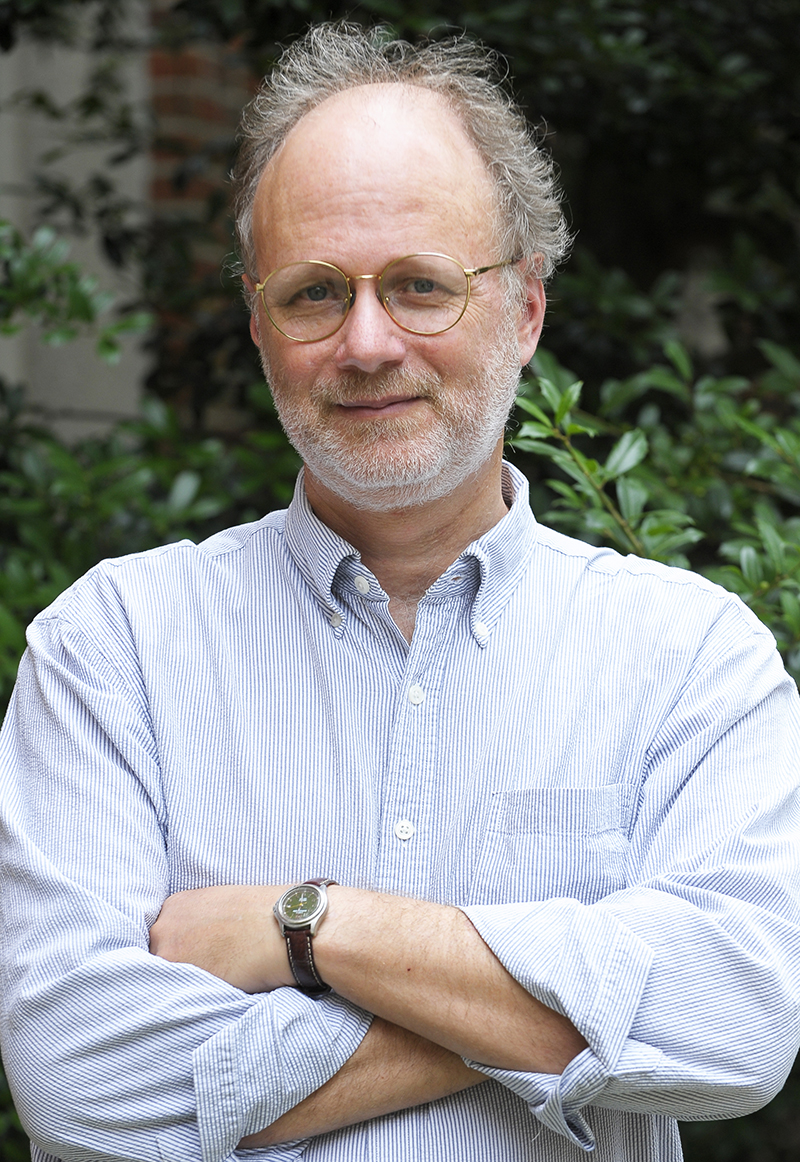
Howard Elman, a leading researcher in numerical linear algebra and trailblazer in computational mathematics, passed away on September 18, 2025, at the age of 71. He was an influential member of both SIAM and the applied math community at large, and his influence and wisdom will live on for years to come.
Howard was born in New York’s Manhattan borough on February 21, 1954. He grew up in Queens, attended Stuyvesant High School, and remained in New York City for college, graduating from Columbia University with a B.A. in mathematics in 1975 and an M.A. in mathematics in 1977. Howard then went on to study computer science at Yale University, where he obtained an M.S. in 1979 and a Ph.D. in 1982 under the direction of Martin Schultz and Stanley Eisenstat. In his oft-cited thesis [1], Howard stated and proved the so-called “Elman bound” — a conception that guarantees the convergence of the generalized minimal residual method iteration for the solution of linear systems, as long as the numerical range of the coefficient matrix is contained in the right half of the complex plane.
During his time at Yale, Howard was an integral part of a large and active research group that pioneered the development of fast iterative methods for the solution of sparse systems of linear equations. After he defended his thesis, he spent three additional years as a research associate at Yale before joining the faculty of the Department of Computer Science at the University of Maryland, College Park (UMD) in 1985. Howard remained at UMD for more than 40 years.
The U.S. National Science Foundation supported Howard’s research of sparse matrix methods with a Presidential Young Investigator Award from 1989 to 1994. Since his professional interests straddled both computer science and mathematics, he also worked closely with colleagues in UMD’s Department of Mathematics — notably Ivo Babuška and John Osborn. As a result of these collaborations, Howard’s research focused increasingly on the design of efficient solvers for systems that arise from the finite element discretization of partial differential equations (PDEs).
A skilled administrator, Howard was particularly active in the University of Maryland Institute for Advanced Computer Studies. In the later part of his career, he also served as director of UMD’s Applied Mathematics Program. Howard was a particularly generous educator who willingly shared his time and knowledge with students and younger colleagues; throughout his tenure at UMD, he advised a plethora of graduate students with skill and patience. He likewise graciously extended this mentorship and assistance to many visiting scholars who were lucky enough to spend time with him in College Park.
Howard’s research was very collaborative in nature, and he worked with many different people across the U.S. and internationally. Gene Golub was a longtime friend and supporter, and the two enjoyed a fruitful collaboration on parallel computing strategies and cyclic reduction techniques in the early 1990s. In fact, Howard spent part of his 1992-1993 sabbatical with Golub at Stanford University. He spent the remaining portion at the University of Manchester Institute of Science and Technology in the U.K. — a visit that kick-started another lasting partnership with David Silvester of Manchester and Andy Wathen of the University of Oxford that centered on solvers for PDE models of fluid flow. The trio’s highly-cited monograph, Finite Elements and Fast Iterative Solvers: With Applications in Incompressible Fluid Dynamics [3], was first published in 2005; the widely-used Incompressible Flow and Iterative Solver Software package—with Silvester and Alison Ramage of the University of Strathclyde—followed soon after [2].
Other important relationships that built upon foundational perspectives from the aforementioned monograph include work with John Shadid and Ray Tuminaro of Sandia National Laboratories, which explored block multilevel preconditioners for large multiphysics simulations with fluids. Howard often joked that he “never got out of school;” indeed, he continued to expand his research interests in the new millennium to include topics like stochastic solvers and uncertainty quantification. His extensive background knowledge and experience with both linear algebra and PDEs put him in an ideal position to study these burgeoning areas of activity. Throughout all of his endeavors, Howard’s perfectionism remained consistent; his papers are notable for their clarity of exposition and constructive strategies when developing technical results.
Beyond his own research projects, Howard played a significant leadership role within the wider applied mathematics community. His contributions to SIAM were invaluable and he was involved with many committees, including the Selection Committee for the James H. Wilkinson Prize in Numerical Analysis and Scientific Computing, the Committee on Science Policy, and the Financial Management Committee; he served on this latter committee for 14 years, where his wise counsel and calm presence were much appreciated. In 2009, he became a SIAM Fellow.
Howard’s primary impact at SIAM, however, was through his editorial work and leadership in the area of publications. He sat on the Editorial Board of the SIAM Journal on Scientific Computing for more than 25 years—including a six-year term as editor-in-chief—and served as Vice President for Publications from 2020 to 2025. In this latter position, Howard led SIAM’s response to several key matters, helping to address the challenges of open-access publication and producing SIAM’s first Editorial Policy on Artificial Intelligence (where his wealth of experience as an editor was vital).
Outside the realm of publications, Howard’s professional contributions extended to conferences. He spent over 30 years as a member of the Program Committee for the Copper Mountain Conference on Iterative Methods, serving as chair for eight of those years. Howard’s final major conference trip was to the 2024 SIAM Conference on Applied Linear Algebra, which took place in Paris, France in May 2024. He very much enjoyed catching up with colleagues and friends at a three-part minisymposium on “New Directions in Iterative Methods and Applications,” which we organized in honor of his 70th birthday.
Although he lived in Washington, D.C., and Maryland for many years, Howard remained a proud New Yorker throughout his life. He eagerly shared his love of its sport teams (primarily the Jets and Mets), music (notably, Simon and Garfunkel) and food; in fact, he insisted that New York was the only place to get a decent sandwich. Howard was also a fan of the Beatles and regularly played tennis with friends and acquaintances.
Howard is survived by his wife, Barbara Schwartz, and their children, Meredith and Andrew. We will all miss him.
References
[1] Elman, H.C. (1982). Iterative methods for large, sparse, nonsymmetric systems of linear equations (Research Report #229) [Doctoral dissertation, Yale University]. Yale University Library.
[2] Elman, H.C., Ramage, A., & Silvester, D.J. (2014). IFISS: A computational laboratory for investigating incompressible flow problems. SIAM Rev., 56(2), 261-273.
[3] Elman, H., Silvester, D., & Wathen, A. (2005). Finite elements and fast iterative solvers: With applications in incompressible fluid dynamics (1st ed.). Oxford, UK: Oxford University Press.
About the Authors
Alison Ramage
Reader, University of Strathclyde
Alison Ramage is a reader in industrial and computational mathematics in the Department of Mathematics and Statistics at the University of Strathclyde in Scotland.
David Silvester
Professor, University of Manchester
David Silvester is a professor of numerical analysis in the Department of Mathematics at the University of Manchester in England.
Andy Wathen
Principal researcher, Rutherford Appleton Laboratory
Andy Wathen is a principal researcher in numerical linear algebra in the Computational Mathematics Theme at the Rutherford Appleton Laboratory in England. He is also an emeritus professor of computational mathematics in the Mathematical Institute at the University of Oxford.
Stay Up-to-Date with Email Alerts
Sign up for our monthly newsletter and emails about other topics of your choosing.